
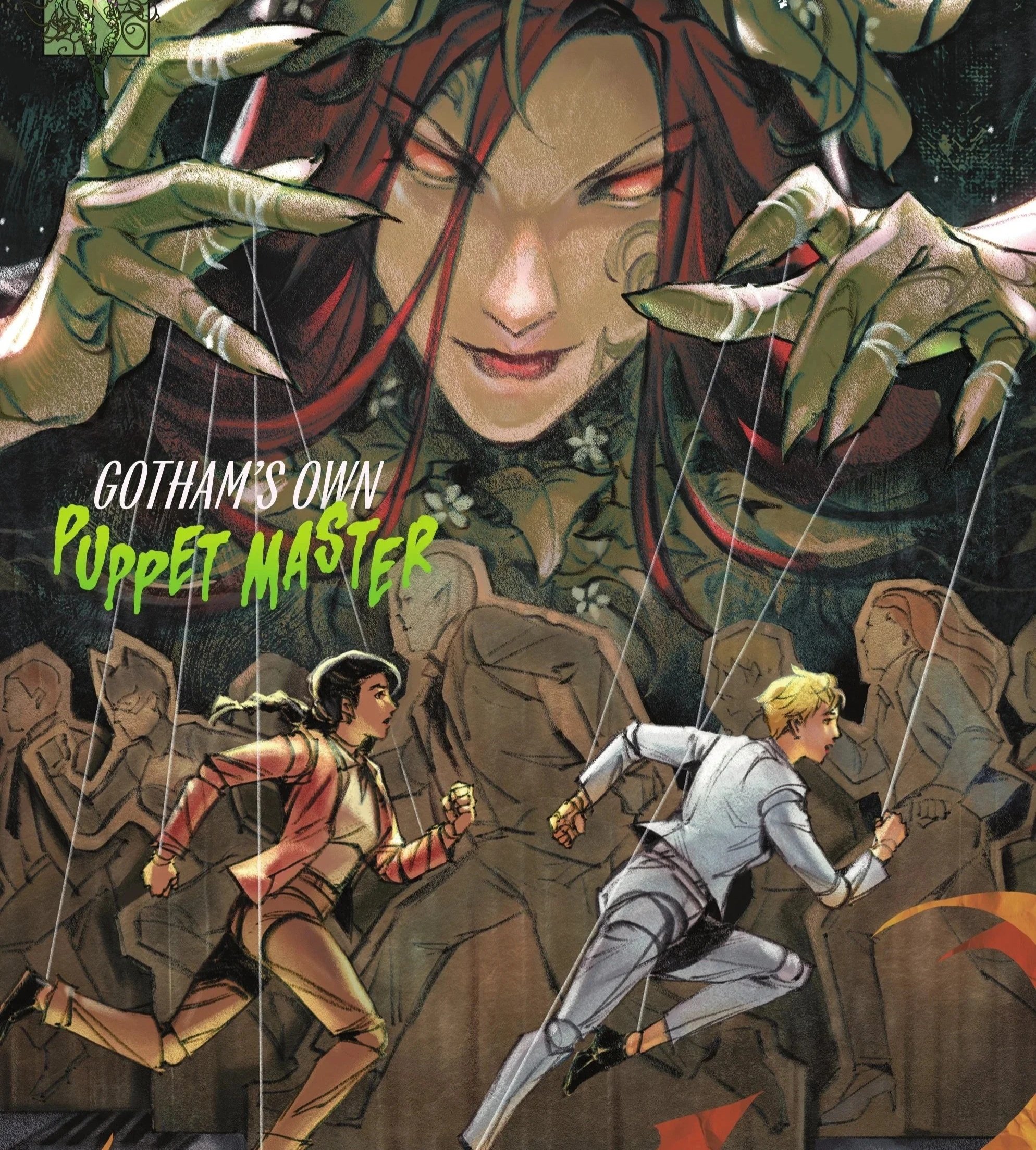
After several issues centered almost entirely on Pamela Isley's increasingly unstable leadership, Poison Ivy #46 takes an unexpected but effective detour. Rather than continuing to follow Ivy herself, G. Willow Wilson hands the spotlight over to Janet and Juhi, allowing the story to explore Gotham through the eyes of the people trying to stop its mayor before everything falls apart.
It is a quieter issue than the chapters surrounding it, and one that functions much more as a bridge into Batman: Bad Seeds than as a major turning point of its own. Even so, Wilson fills that quieter space with meaningful character work and several important revelations that deepen the ongoing mayoral storyline, even if the artwork occasionally struggles to match the emotional subtlety the script demands. While the plot itself only inches forward, the issue succeeds because it spends that time examining the cost of Ivy's revolution and asking whether good intentions can survive the realities of power.
Gotham Hasn't Become the City Ivy Promised
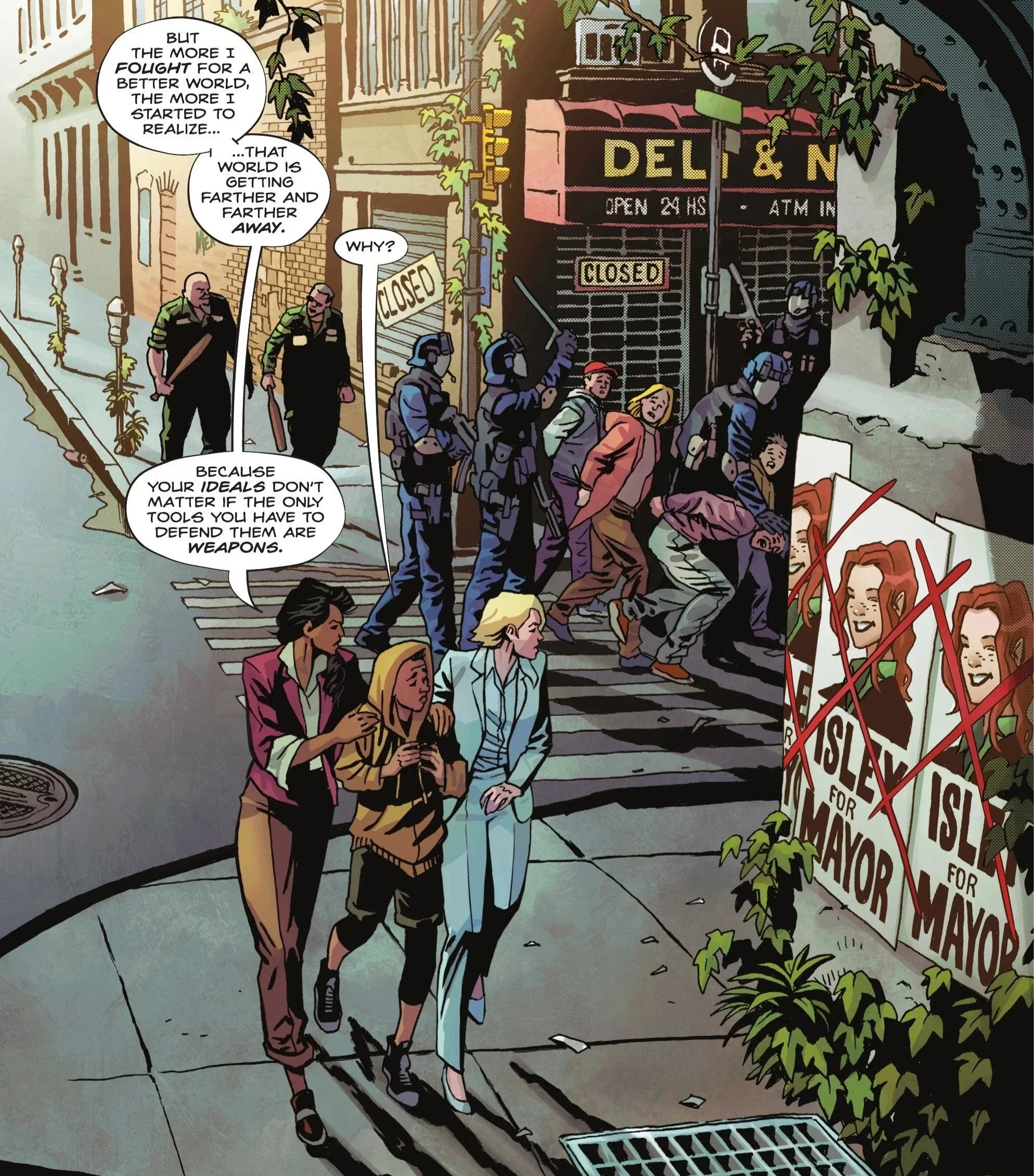
One of the strongest aspects of the issue is how clearly it demonstrates that Ivy's administration has failed to create the Gotham she envisioned.
Throughout the mayoral storyline, Wilson has avoided presenting Ivy's leadership as either an outright success or an outright disaster. Instead, the city has remained trapped in many of the same cycles of corruption that existed before Ivy took office. This issue reinforces that idea by showing ordinary citizens continuing to suffer while institutions remain just as oppressive as ever.
The encounter with the teenager fleeing the police is particularly effective. The scene is relatively small in the grand scheme of the issue, but it says a great deal about Gotham's current state. Ivy may occupy the mayor's office, yet Vandal Savage's police force continues operating with little accountability. The image of officers aggressively pursuing a teenager for something as minor as loitering immediately undercuts the idea that meaningful reform has taken place.
The later revelation that this same teenager was the witness Ivy's administration promised to protect after Marie Henley's murder makes the situation even more tragic. Rather than portraying Ivy as deliberately abandoning someone in need, Wilson suggests that the responsibilities of governing have simply overwhelmed the promises made earlier in the series. It is a subtle but effective reminder that failing people can be just as damaging as intentionally hurting them.
Janet and Juhi Carry the Story
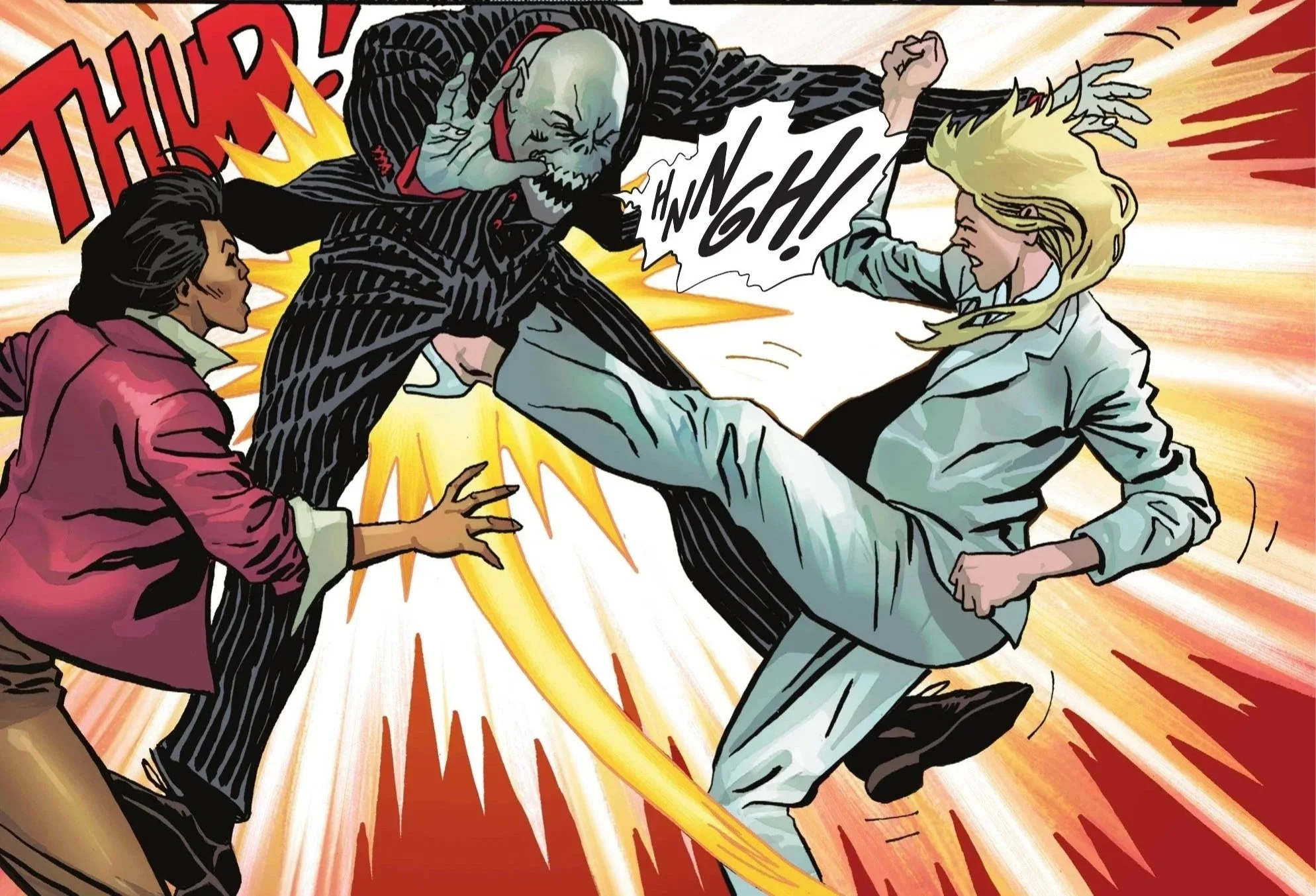
With Ivy largely absent, Janet and Juhi become the emotional heart of the issue.
Their decision to search for Harley Quinn feels like a natural continuation of everything that has happened over the past several chapters. They recognize that Ivy is no longer listening to her advisors or allies, leaving Harley as perhaps the only person capable of reaching her before the situation becomes irreversible.
What makes their storyline particularly engaging is that it is not simply about finding Harley. It also becomes a conversation about responsibility, compromise, and what it means to fight for a better world after idealism begins colliding with reality.
Juhi receives some of her strongest material of the series here. Her growing frustration with Gotham and her belief that preserving the existing system may ultimately be necessary create an interesting contrast with Janet's refusal to abandon Ivy entirely. Neither character feels entirely right or entirely wrong, which makes their conversations considerably more compelling than if the issue simply divided everyone into heroes and villains.
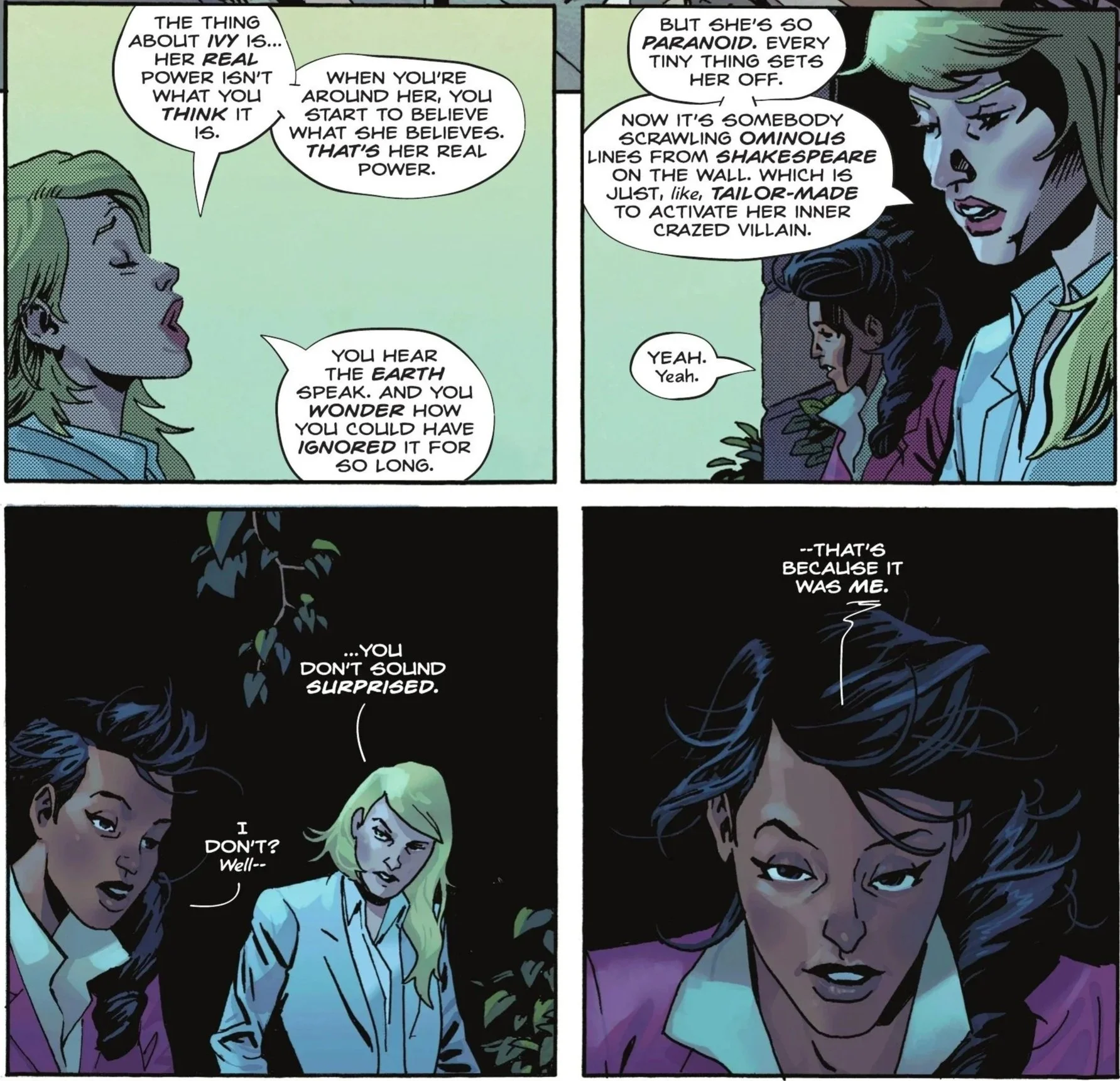
The revelation that Juhi has been writing the Shakespeare quotations haunting Ivy since issue #43 also works well. It answers a lingering mystery while adding another layer to Juhi's motivations. Rather than trying to destroy Ivy, she has been attempting to force her to confront what power has turned her into.
Wilson Continues Exploring the Nature of Power
Power has always been one of the central themes of this run, but Poison Ivy #46 broadens that discussion beyond Ivy herself.
Nearly every major conversation revolves around what authority does to people. Gotham's police abuse their power. Members of Ivy's administration become increasingly disconnected from the people they were meant to serve. Even Juhi begins questioning whether protecting institutions is more important than protecting individuals.
Wilson occasionally pushes these ideas so directly that the dialogue feels a little more like political philosophy than natural conversation. Some readers will likely find those moments heavy-handed, particularly when characters explain the themes instead of allowing events to communicate them organically.
Personally, I did not mind it as much as I expected. The series has never been especially subtle about its political interests, and Gotham has always been a setting where larger ideological debates naturally fit into the narrative. While I still would have preferred a bit more restraint in places, I also understand why Wilson chooses clarity over ambiguity. These conversations form the backbone of the issue, and they largely succeed in giving the quieter pacing something substantial to build around.
An Effective Bridge That Doesn’t Move Very Far
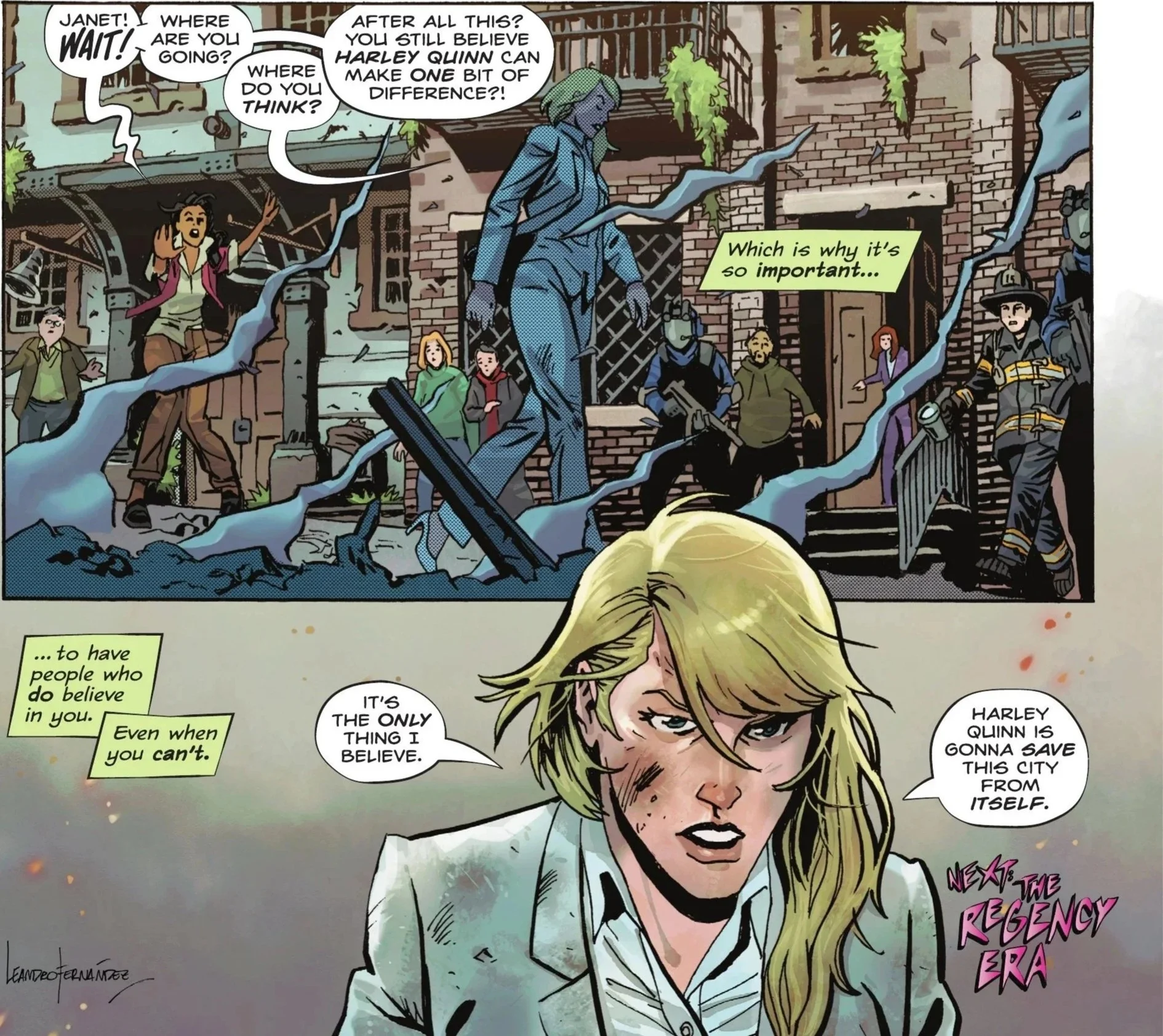
My biggest criticism is simply that the story does not progress very much.
By the end of the issue, Janet and Juhi are still searching for Harley, Ivy remains isolated, and Gotham continues drifting toward the inevitable conflict that has been teased for months. There are meaningful revelations along the way, but structurally, the story ends in almost the same place where it began.
Fortunately, those revelations are interesting enough to keep the issue from feeling disposable. Learning more about Juhi's motivations, seeing how thoroughly Gotham has deteriorated, and watching Janet desperately cling to hope all add important texture to the larger narrative. Even if the destination barely changes, the journey remains worthwhile.
The Artwork Struggles More in a Dialogue-Driven Issue
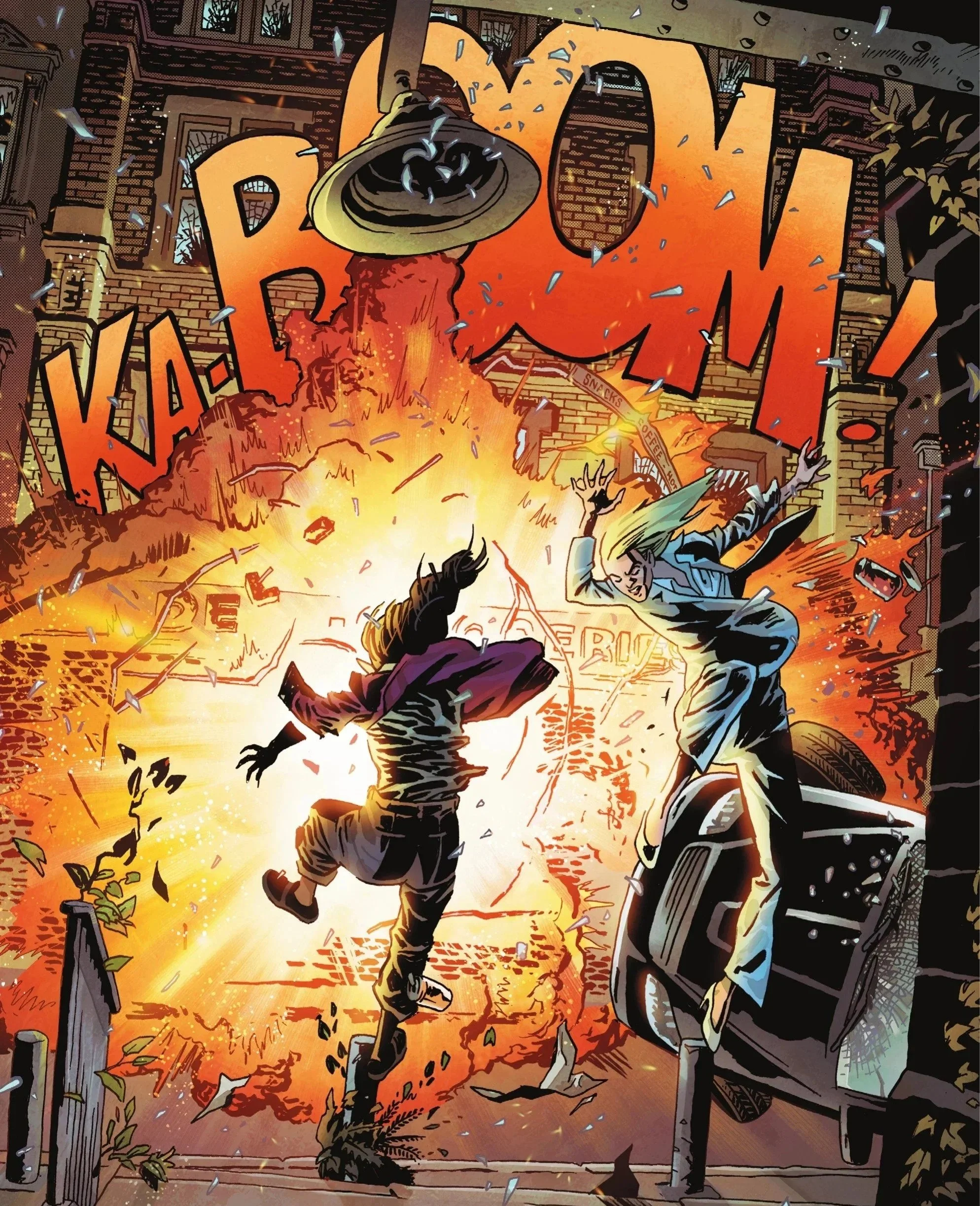
The artwork remains something of a mixed bag, though I found its shortcomings more noticeable here than they were in the previous issue.
Leandro Fernandez still excels whenever the story leans into Gotham's atmosphere or the stranger, more surreal elements that have defined much of this run. The environments carry a grimy, oppressive quality that fits the increasingly unstable state of the city, and the darker mood complements Wilson's script well.
The problem is that Poison Ivy #46 spends almost its entire runtime focused on conversations and character interactions. Unlike the previous issue, there are very few large action sequences or supernatural set pieces to distract from the artwork's portrayal of people. As a result, Fernandez's stylized approach to faces and anatomy stands out much more prominently.
Several characters appear oddly proportioned throughout the issue, and facial expressions occasionally lack the nuance the dialogue is asking them to convey. Janet and Juhi carry the emotional weight of the entire story, but there are moments where their expressions feel stiffer than the writing itself. Considering how dependent this issue is on interpersonal drama, those visual shortcomings become harder to overlook than they were in Poison Ivy #45, where the Parliament of Trees, Xylon, and other supernatural imagery naturally played to Fernandez's strengths.
The issue is still visually distinctive, and there are several strong panels throughout, but this chapter reinforces that Fernandez is far more comfortable illustrating atmosphere and horror than quieter, character-driven drama. Since the comic relies so heavily on those human moments, the artwork never quite reaches the level the script deserves.
Final Thoughts and Rating
Poison Ivy #46 functions primarily as a bridge between larger events, but it makes excellent use of that role by examining the consequences of Ivy's administration through the perspectives of Janet and Juhi. Rather than focusing on spectacle, Wilson explores how revolutions can falter once ideals collide with reality, while continuing to build toward the confrontation waiting in Batman: Bad Seeds.
Although the issue does not significantly advance the main plot and some of its thematic discussions occasionally become more explicit than necessary, the strong character work and meaningful revelations keep it engaging throughout. The artwork remains the issue's biggest weakness, as its stylized approach to human characters becomes far more noticeable in a story driven almost entirely by conversations and emotional performances than it was in the previous chapter.
This may not be one of the biggest issues of the run, but it is an important one, and it reinforces that the most interesting conflict is no longer whether Ivy can seize power. It is whether she can recognize what that power has already cost her before it is too late.
Rating: 8.5/10
A thoughtful bridge chapter that prioritizes character development and thematic depth over major plot progression while continuing to build anticipation for the series' next major turning point.